A black masking adhesive bonds optical or semiconductor parts and blocks light in the same step. It is used at the boundaries where light leaks or unwanted light enters: filter edges, lens holder joints and the area around an image sensor.
Are you looking for a material that stops light leaking between optical components? Or do heat-sensitive parts mean you need a black adhesive that cures at around 80°C?
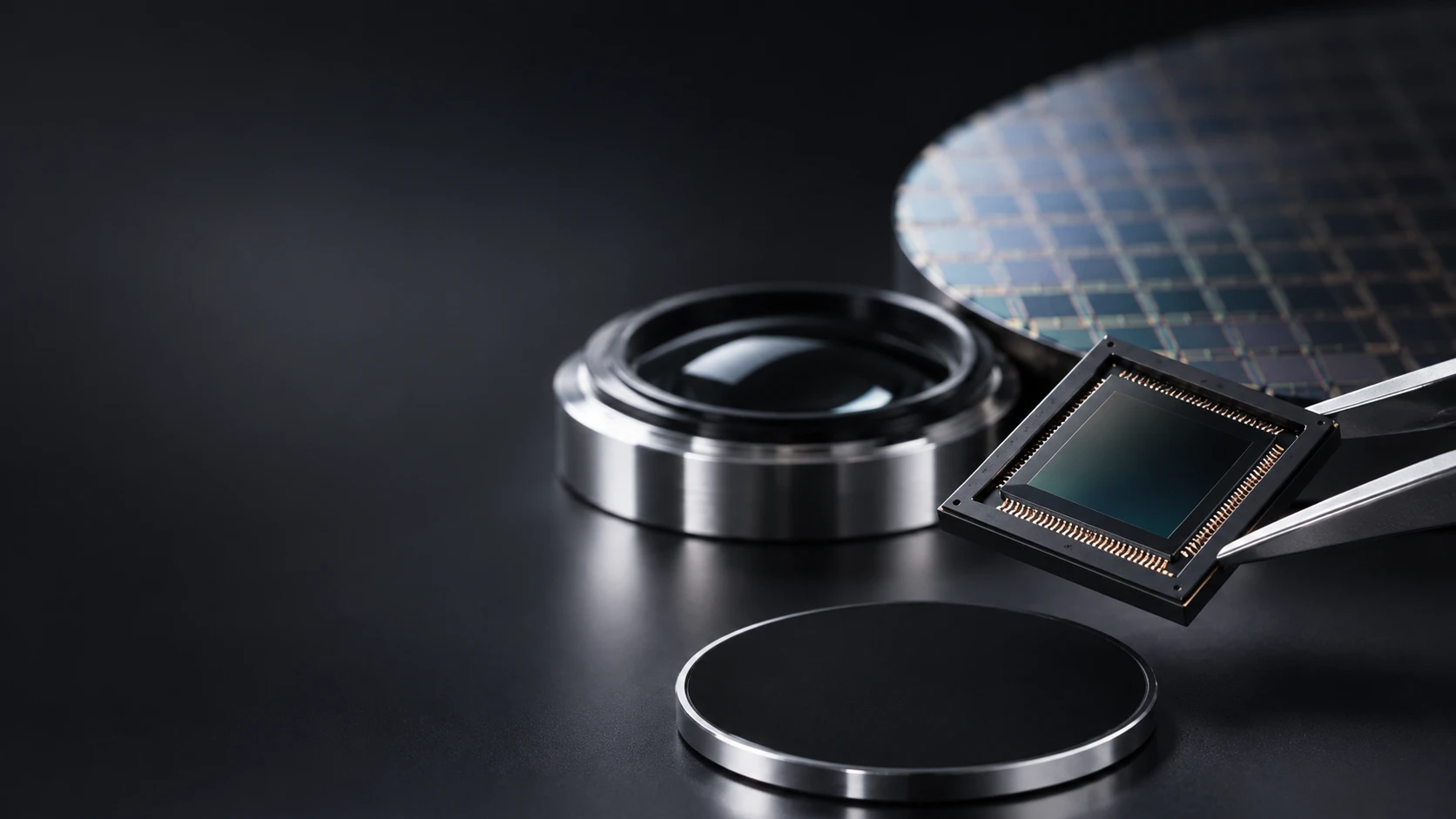
Where light leaks in optical assemblies
In camera and optical modules, the light that degrades an image usually enters from outside the designed optical path. Patent literature points to the same few locations again and again:
- Filter edges: light entering through the side of an IR filter or cover glass reaches the sensor. One proposed fix is a ring of black epoxy around the filter edge.
- The adhesive layer itself: if the adhesive fixing the bracket and lens holder is clear or translucent, light passes through it.
- Lens periphery: reflections at lens boundaries become stray light and cause flare. Opaque adhesive members are used to absorb it.
Each of these is both a bonding location and a place where light must be blocked, which is why a single black adhesive that does both is attractive.
Black adhesive vs. black masking tape
Tape or printed ink is convenient for covering flat areas. Curved surfaces, steps and narrow gaps are harder to cover with a pre-cut shape. A liquid black adhesive can be dispensed into those shapes and fix the part in the same operation. The trade-off is that coating thickness and placement now control light-blocking performance, so they have to be held in the process.
Why low-temperature cure matters for optical parts
Lens holders and housings in camera modules are often LCP or PC. The higher the cure temperature, the more you have to worry about thermal distortion of these parts and about the aligned optical axis shifting during cure. That is why one-component epoxies that cure at around 80°C exist as their own category of camera module adhesive.
Black adhesives add one more constraint. The black pigment absorbs UV, so UV alone struggles to cure thick or shadowed areas fully. Black materials are therefore often heat-cured or combined with a heat-cure step, and a lower cure temperature reduces the thermal load on surrounding parts.
What to check when blocking light with a thin coating
- Transmittance at your thickness: the same material passes more light when applied thinner. Check transmittance at the thickness your process actually produces.
- Wavelength range: blocking visible light and blocking near-infrared (NIR) are separate properties. Check the full range your sensor responds to.
- Surface reflection: blocking stops transmission; stray light from reflection is a surface reflectance issue. Look at both numbers.
- Adhesion and reliability: alongside light blocking, check bond strength, cure shrinkage, and changes after humidity and thermal cycling.
COFA 3200HBM test results
COFA 3200HBM is a black adhesive under development for light blocking and bonding in optical and semiconductor components. The values confirmed so far:
| Property | Value | Type | Note |
|---|---|---|---|
| Average visible transmittance | 0.295% | Measured | 20 μm coating, averaged over 360–780 nm |
| Average visible reflectance | 4.251% | Measured | Averaged over 360–780 nm |
| Optical density (OD) | ≈ 2.53 | Calculated | From average transmittance (OD = −log₁₀T) |
| Coating thickness | 20 μm | Test condition | Thickness used for the optical measurements |
| Wavelength range | 360–780 nm | Test condition | Visible range |
| Cure condition | 80°C | Process condition | Low-temperature heat cure |
Measured and calculated values are labelled separately. Optical density is calculated from the average transmittance, not measured independently.
How to read these numbers
- 0.295% transmittance: at 20 μm, roughly 1/340 of visible light passes through.
- OD ≈ 2.53: OD 1 is 10% transmittance, OD 2 is 1%, OD 3 is 0.1%. 2.53 sits between 1% and 0.1%.
- 4.251% reflectance: close to what an ordinary polymer surface reflects (about 4%). It is not an anti-reflective, low-reflectance value; if reflected stray light is the problem, surface treatment should be considered as well.
Applications to evaluate
3200HBM can be evaluated for light blocking and bonding in the following areas.
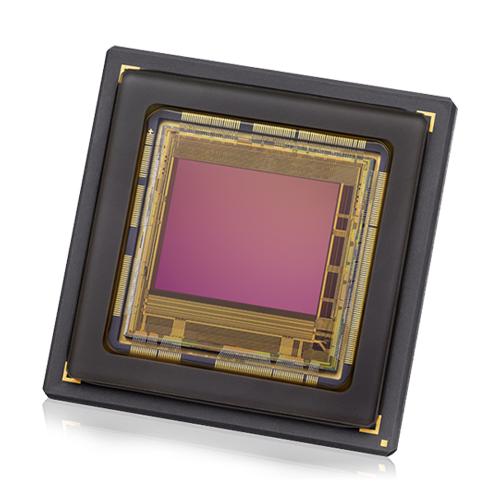
- Camera modules: filter-edge light blocking, lens holder and bracket joints
- Light shielding and masking around CIS (image sensors)
- Stray light blocking in WLO (wafer-level optics) and optical modules
- Precision optical bonding and black masking on semiconductor components
Frequently asked questions
What is a black masking adhesive?
A black adhesive that bonds optical or semiconductor parts and blocks light at the same time. It is dispensed at boundaries where light leaks or unwanted light enters, such as filter edges, lens holder joints and the area around an image sensor.
What does low visible light transmittance mean?
Only a small fraction of 360–780 nm visible light passes through the material. A transmittance of 0.295% means roughly 1/340 of the incident light gets through, which corresponds to an optical density (OD) of about 2.53.
What is an 80°C curing adhesive used for?
It is considered for assemblies with heat-sensitive parts, such as plastic lens holders, or where thermal distortion during cure could shift optical alignment. Compatibility still has to be tested against the actual part materials and process.
What applications require optical light-blocking materials?
Camera modules, image sensors (CIS), wafer-level optics (WLO), optical modules and other precision optical assemblies where stray light or light leakage degrades image quality or signal.
What are the optical properties of COFA 3200HBM?
At 20 μm coating thickness over 360–780 nm, average visible transmittance is 0.295% and average reflectance is 4.251% (measured). The calculated optical density is about 2.53. It cures at 80°C.
Share your application requirements
Are you looking for a black adhesive for an optical or semiconductor application? COFA welcomes discussions based on your application environment, required light transmittance, coating thickness and curing temperature.
Published 2026-11-02 · COFA Co., Ltd. technical team